
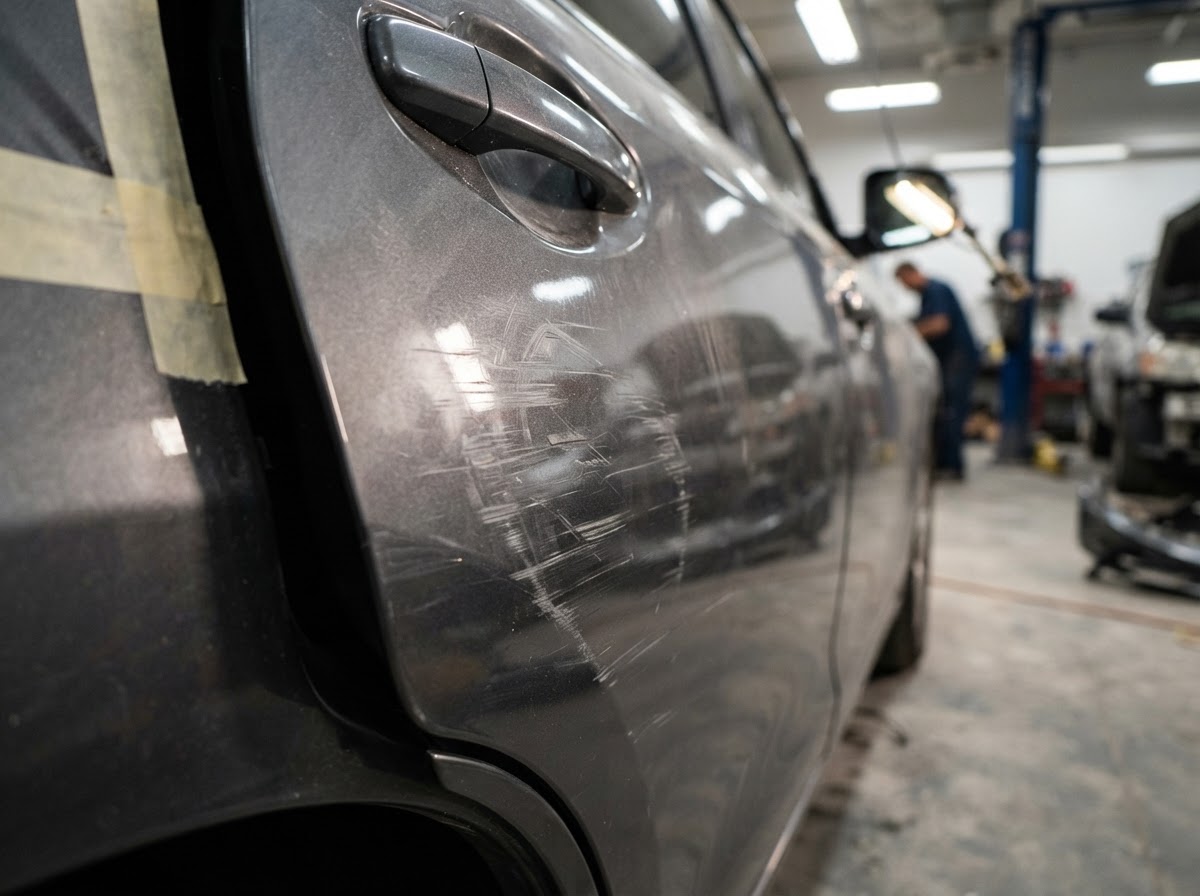
When a vehicle has a scratch, the first question is usually whether it can be buffed out or whether it needs repainting. The answer comes down to one factor: how deep the scratch goes. This article explains the difference between polishing and refinishing, when each applies, and why an inspection — not a guess — determines the right approach.
Polishing and buffing work on the surface. They level the existing clear coat to remove suitable imperfections — light scratches, swirl marks, scuffs, and haze that sit in the transparent top layer. The color beneath is intact, and no new paint is applied. Polishing restores the gloss and smoothness of the existing finish. It's typically the less involved approach, and it works when the damage hasn't cut through the clear coat. Our scratch repair, polishing, and finishing service handles this work.
Refinishing goes deeper. When a scratch has cut through the clear coat and into the color layer — or all the way to the substrate — polishing alone won't restore it, because the paint has been removed. Refinishing involves preparing the surface, sanding the area, applying primer if needed, repainting with matched color, and applying clear coat. The repaired area is then polished and blended so it matches the surrounding panels. This is a more involved process, and it's what's needed when the damage reaches the color or beneath.
The decision comes down to depth. A scratch in the clear coat can usually be polished. A scratch in the color or substrate needs refinishing. That's why the inspection matters — it confirms which layers are affected before any work begins, so you're not paying for refinishing on a scratch that could have been polished, and you're not polishing a scratch that needs paint. For more on the types of scratch damage and how to think about depth, our article on understanding scratch and paint damage covers the basics.
There are gray areas. A scratch that's deep in the clear coat but hasn't quite reached the color may respond to polishing with some extra attention, or it may need a light refinishing of the affected area. A scratch that's right at the boundary between the clear coat and the color is a judgment call based on the inspection. The shop assesses the depth and explains which approach applies and why — there's no universal rule that fits every scratch.
The size and location of the scratch also factor in. A small, localized scratch may be addressed with a spot repair — refinishing just the affected area and blending it into the surrounding panel. A longer scratch across a panel, or one that spans multiple panels, requires a larger refinishing scope. The location matters too: a scratch on a flat, accessible panel is typically more straightforward than one on a curved surface or near trim. The inspection considers all of these factors.
The condition of the surrounding paint is another consideration. If the vehicle's finish is aged or faded, the refinished area needs to match the current state of the paint, not the original factory color. Matching aged or sun-damaged paint can require blending the color into adjacent panels for a consistent result. Our automotive painting and color matching service handles this work, and we explain what to expect based on your vehicle's finish.
Several questions are worth asking before scratch work begins. How deep is the scratch — is it in the clear coat, the color, or the substrate? Will polishing be enough, or does the area need refinishing? If refinishing is needed, how will the color be matched, especially if the paint is aged? How large is the area that needs work? These questions help you understand the scope and avoid surprises.
It also helps to understand what polishing can and can't do. Polishing removes suitable surface imperfections and can greatly improve the look of a finish, but it won't remove deeper scratches, and it won't restore color that's been removed. If a scratch has cut through the paint, no amount of polishing will bring the color back — that requires refinishing. Being honest about what polishing can and can't fix helps you set realistic expectations before the work begins.
If your vehicle has a scratch, the most useful next step is to request an assessment so the depth can be confirmed in person. We'll explain whether polishing or refinishing is appropriate, what the repair involves, and how the finish will be matched. You can also call us directly. For more on how to care for a refinished surface after the repair, our article on caring for repaired paint surfaces covers the aftercare basics.
Have questions about scratch repair or finishing? Contact RPC Autobody Collision in Hialeah through the website or call (786) 769-1309 to discuss the next step. This article provides general educational information and is not a diagnosis of a specific vehicle or a substitute for an in-person inspection. Damage, repair methods, parts, and results vary by vehicle and condition.
Frequently Asked Questions
Need a damage assessment?
Contact RPC to discuss your vehicle and the repairs it may need. An in-person inspection is the most reliable way to determine the repair scope.
More Articles
What to Check After a Collision
After an impact, visible damage is rarely the whole story. Here's what we look at during a damage inspection and why an assessment matters before any repair plan.
Read articleCollision Repair vs. Replacement: What Factors Matter
Not every damaged panel can be repaired, and not every broken part needs replacing. Here's how the repair-versus-replacement decision is approached after an inspection.
Read articlePreparing for Collision Repair and Vehicle Pickup
From the information to gather before contacting the shop to what to review when you pick up your vehicle, here's what to expect at a high level.
Read article
Bumper Repair or Replacement: How We Decide
A dented or cracked bumper doesn't always mean a full replacement. Here's how an inspection helps determine whether a bumper can be repaired or should be replaced.
Read article
Why Color Matching Matters in Auto Body Repair
A good paint repair isn't just about applying color — it's about making the repaired area blend with the rest of the vehicle. Here's what automotive color matching involves.
Read articleUnderstanding Dent and Bumper Damage
A dent might look simple, but the material, location, and surrounding structure all affect what the repair involves. Here's what vehicle owners should understand before contacting the shop.
Read articleWhat to Expect From Dent and Bumper Repair
From the information to gather before you contact the shop to what to review at pickup, here's what to expect when bringing in a dented panel or damaged bumper.
Read articleAutomotive Paint Repair: Key Considerations
Not all paint damage needs the same approach. From surface scratches to full panel refinishing, here are the factors that shape a paint repair decision.
Read articlePaint Repair and Aftercare Essentials
From what to do before a paint repair to how to care for the finish afterward, here's what vehicle owners should know to protect a refinished surface.
Read article
Understanding Structural Damage After a Collision
Structural damage isn't always visible from the outside. Here's what it means, what signs to look for, and why it's evaluated separately from cosmetic damage.
Read articleStructural Repair: What to Consider
Not all structural damage can be straightened. Here are the factors that shape the decision to straighten, pull, or replace structural components after a collision.
Read articlePreparing for Structural Repair
From the information to gather before you contact the shop to what to review at pickup, here's what to expect when a vehicle needs structural straightening.
Read articleUnderstanding Scratch and Paint Damage
Not every scratch needs the same repair. Here's how to think about the depth, type, and location of paint damage — and why an inspection determines the right approach.
Read articleCaring for Repaired Paint Surfaces
A refinished panel needs proper care to look its best and last. Here's what vehicle owners should know about protecting a repaired paint surface after pickup.
Read article
Understanding Panel Alignment and Fit
After a collision, uneven gaps and doors that don't close properly are signs of panel alignment issues. Here's what panel alignment means and how it differs from other adjustments.
Read articleWhen to Repair or Replace Damaged Body Parts
Not every damaged part can be repaired, and not every broken component needs replacing. Here are the factors that shape the repair-versus-replacement decision for body parts.
Read articlePreparing for Panel Alignment and Parts Repair
From what to gather before you contact the shop to what to review at pickup, here's what to expect when a vehicle needs panel alignment or damaged parts repair.
Read article